If you’re a professional in Denver between 30–60, you’ve probably noticed a pattern:
You crush long workdays.
You power through stress.
You hold yourself to a higher standard than most people ever will.
But meanwhile…
- Your hips feel tight every morning
- Your low back clenches on the drive down I-25
- Your knees ache halfway through a ski weekend or 10 minutes into your hike
- You feel stiff for no reason
Most people shrug this off as aging.
But most times, Age isn’t the enemy. Mechanics are.
(Unless you have pre-existing medical conditions, in which case you should always consult a licensed medical professional before beginning or modifying any exercise program.)
You aren’t in pain because you’re ‘getting older.’ You’re in pain because your posture, stabilizers, and joint mechanics can’t keep up with your lifestyle.
Which is bad news.
But the good news?
Posture is one of the fastest, most ROI-positive things you can fix.
It unlocks everything: strength, energy, confidence, and pain-free movement.
This article will show you why posture matters and how to fix it using the exact system I use to help Denver professionals eliminate chronic pain, rebuild confidence, and move like athletes again, even after years of frustration.
Table of Contents
- What Posture Actually Is
- How Good Posture Impacts Confidence, Lifting Power, and Mountain Performance
- Voluntary vs Involuntary Posture (This One Distinction Changes Everything)
- How to Assess Your Posture at Home
- The FlexFlow Corrective PyramidTM (My Proven 5-Stage System)
- The Best Exercises for Building Automatic, Pain-Free Posture
- The Cost of Ignoring Posture
- The Path to Pain-Free Performance
- References
1. What Posture Actually Is (And Why Most Get It Wrong)
Your Spine = The Command Center
- The spine has 3 regions: cervical, thoracic, lumbar
- If any region is stiff, overextended, or weak, every lift
and every daily movement becomes inefficient.
Your Ribcage & Pelvis = The Foundation of Stability
- If your ribcage flares or your pelvis tilts forward/backward, your core can’t create proper intra-abdominal pressure. Leading to lower-back pain, tight hip flexors, weak glutes, shallow breathing that can trigger stress responses.
- Just look around any working space; this is the default posture.

Your Deep Stabilizers = Your “Anti-Injury Squad”
- Deep stabilizers like the (not all showed in pic):
- Erector spinae (spinal erectors) – keep you
upright - Multifidus – segmental stabilizer along the
spine - Quadratus lumborum (QL) – helps control side-bending
- Deep core team– transverse abdominis, diaphragm, pelvic floor
- Erector spinae (spinal erectors) – keep you
- All work together to automatically support your spine. This is where chronic pain takes root.
These are the muscles responsible for pain-free, automatic posture.
When they’re offline, big muscles start doing jobs they’re not meant for:
- Glutes shut down → low back takes the load
- Mid-back weakens → neck and traps overwork
- Hips stiffen → knees take forces they shouldn’t
This is why so many 30–60-year-old professionals develop the same patterns: Forward head. Rounded shoulders. Tight hip flexors. Low-back stiffness. Knee pain.
Not because something is “wrong.”
Because their body is compensating.
Your Nervous System = The Silent Architect/Conductor
- Unfortunately we don’t rise to the level of our good intentions for going to the gym a few times to fix it, we fall to the level of our engrained neuromuscular patterns.
- If you’ve sat rounded for 10 years…
- If you’ve been stressed for 5 years…
- If you’ve trained with poor mechanics for 3 years…
- Your nervous system has built those patterns into your identity.
- This is why stretching alone changes nothing.
- You must retrain your neuromuscular software.
Want to dive deeper into the science of stronger glutes? Read this article:
https://www.flexflowbylukerowe.com/blog//why-glutes-are-weak-and-how-to-fix-them
This is where Corrective Exercise becomes life-changing!
Corrective exercise teaches your body to move the way it was designed to move:
- Your ribcage and pelvis re-align.
- Your spine takes its natural shape again.
- Your deep core system wakes up.
- Your joints finally share forces correctly.
- And your nervous system learns a new, healthier “default.”
The Denver professionals I work with feel the difference quickly because:
When your body moves better, your pain drops, your performance rises, and you naturally carry yourself with more confidence.
2. How Posture Impacts Self-Esteem, Improves Your Lifts and, Enhances Performance
A. Self Esteem:
Good posture isn’t just physical; it has a correlation to your mental health and shapes how you feel about yourself.
Aligned posture improves:
- confidence
- mood
- energy
- presence
Posture affects not only biomechanics but also psychological perception and breathing efficiency (NASM, 2023). When your body moves well and pain decreases, your confidence naturally rises. You stand taller, breathe deeper, and show up differently in your work, your relationships, and your workouts.
B. Better Lifts:
Posture is the foundation of safe and strong lifting. Proper alignment improves force production, joint stability, and prime mover efficiency.
This means better:
- squats
- deadlifts
- overhead presses
- rows
- kettlebell work
- Olympic lift progressions
When posture improves, every lift feels smoother, lighter, and stronger.
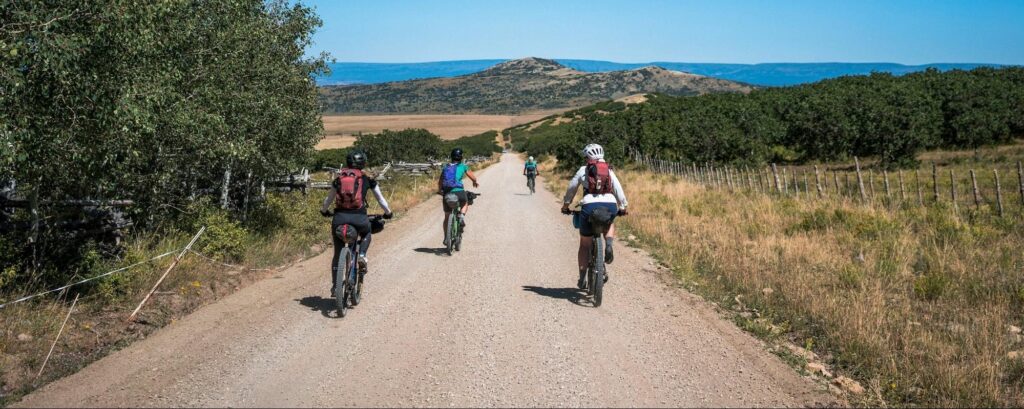
C. Performance (Skiing, Hiking, Pickleball, etc..)
Denver is one of the most active cities in the country but also one of the most injury-prone.
Poor Posture affects:
- breathing efficiency at altitude
- knee tracking on descents
- hip mobility on steep grades
- balance and edging while skiing
- spinal endurance during long days
- shock absorption through the entire kinetic chain
- lateral movements in pickleball
Correct posture = safer, stronger, more confident movement anywhere in Colorado.

3. Voluntary vs. Involuntary Posture
Voluntary posture
You try to stand tall. You try to keep your shoulders back. You try to brace your core. And it only lasts until your brain gets tired.
Involuntary posture
Your automatic default, shaped by neuromuscular patterns, not willpower.
NASM emphasizes that corrective exercise retrains involuntary posture by improving joint alignment, muscle balance, and neuromuscular control (NASM, 2023).
This is why the changes last.
It becomes effortless.
4. How to Assess Your Own Posture
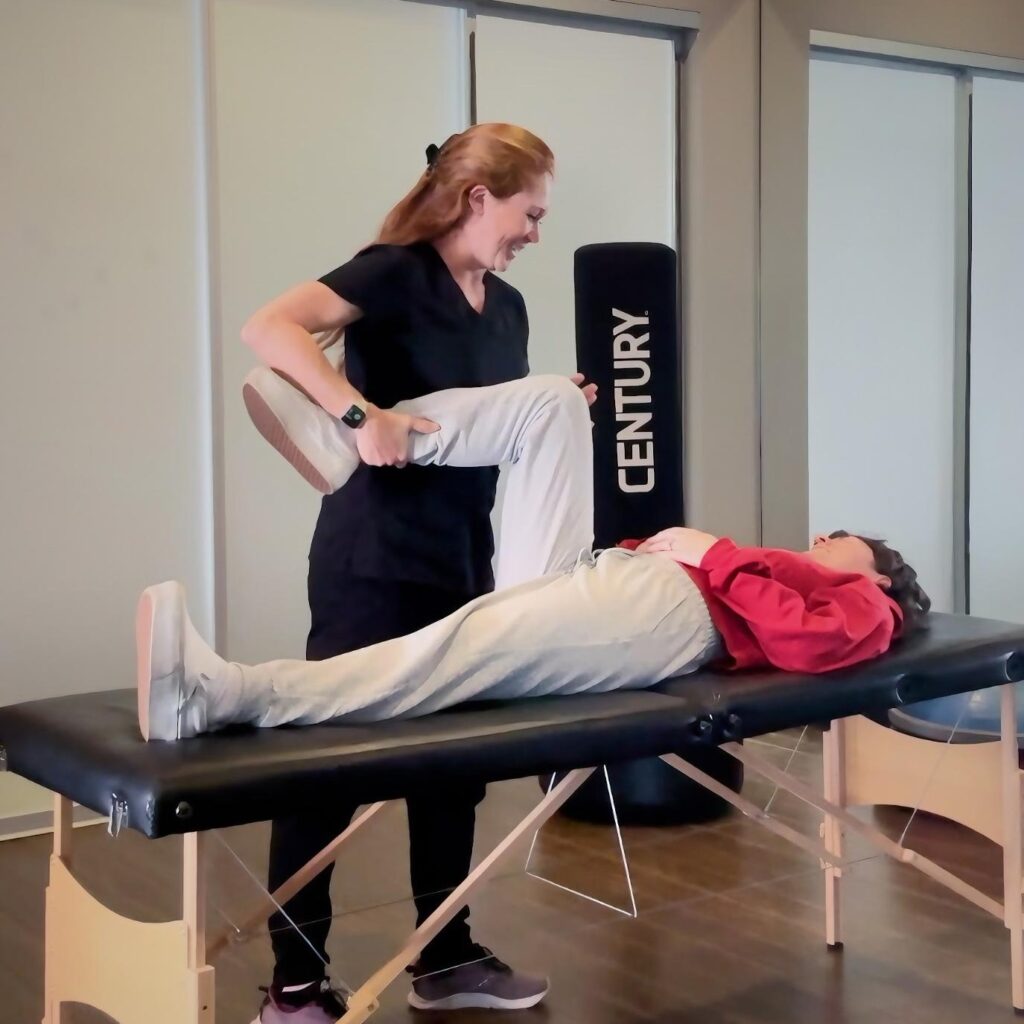
It is recommended that you have a professional assess your posture. But if you just can’t wait that long and you are eager to jump in here is what a simple self-assessment involves:
Static Posture Check
Front + side view. Look for:
- forward head posture
- rounded shoulders
- rib flare
- anterior/posterior pelvic tilt
- knee valgus
- foot pronation
Movement Assessment:
Look for different movements such as arms fall forward, feet pronate/supinate, knee caves in or out, heel comes off the ground.
- Overhead Squat Assessment
- Single-Leg Squat Assessment
- Pushing/Pulling assessments
If any of these show up consistently, your body is compensating.
Want a deeper dive?
Book a free movement assessment with me Here! I’ll tell you exactly where your breakdown is and how to fix it.

5. The FlexFlow Corrective Pyramid
(My 5-Stage System Used by Denver Professionals to Get Out of Pain Fast)
RESET
Breathing + ribcage/pelvis alignment
(90/90 breathing, decompression breathing)
ACTIVATE
Deep core + glutes
(dead bug, bridge progressions, hip isometrics)
PATTERN
Squat, hinge, lunge, push, pull mechanics (hip hinge drills, wall slides, scapular work)
INTEGRATE
Real-world movement patterns (carries, anti-rotation, single-leg work)
PERFORM
Skiing, hiking, lifting, pickleball, running (sport-specific corrective prep)
This is the system I use with every Denver professional who wants less pain, stronger movement, and better performance year-round.
6. The Best Exercises for Building Automatic Posture
These drills retrain involuntary posture, not the “stand up straighter” posture that never works.
1. 90/90 Diaphragm Breathing *ESSENTIAL SKILL* (Ribcage–Pelvis Alignment Reset)
- This drill teaches your diaphragm, core, and pelvis to work together which is the foundation of all healthy posture.
- It reduces rib flare, improves breathing mechanics, and restores core stability needed for pain-free movement.
2. Dead Bug (Deep Core Activation)
- The dead bug wakes up the transverse abdominis and multifidus, the muscles responsible for stabilizing your spine automatically.
- This exercise helps reduce low-back overcompensation and improves pelvic control during both lifting and daily activities.
3. Wall Slides / Wall Angels (Scapular Control)
- These are essential for strengthening your lower traps, serratus anterior, and mid-back muscles.
- They counteract rounded shoulders, forward head posture, and upper-trap dominance which are all a
part of Upper Crossed Syndrome common in desk workers.
4. Hip Hinge Wall Drill (Posterior Chain Patterning)
- A simple but powerful drill that retrains the brain to hinge from the hips rather than flex through the spine.
- This corrects low-back loading, improves glute recruitment, and sets the foundation for safer deadlifts and RDLs.
5. Split Squat Isometrics (Pelvic Stability + Glute Activation) (Pictured)
- A unilateral split stance challenges your pelvis and core to stabilize while your lower body works.
- This improves knee alignment, glute activation, and balance, all essential for hiking, skiing, and lifting.
6. Bird Dog (Cross-Body Stability)
- This exercise enhances the body’s ability to stabilize across the spine and hips.
- It improves motor control, reduces lumbar instability, and reinforces healthy cross-patterned movement.

7. Farmer Carries / Suitcase Carries (Posture Under Load)
- Loaded carries build real-world posture.
- They challenge the core and hips to stay aligned while moving, training your body to maintain good
posture without conscious effort.
8. Thoracic Spine Extensions Over Foam Roller
- This improves upper-back mobility, reducing excessive forward rounding and restoring proper ribcage mechanics.
- Better thoracic mobility reduces strain on the neck, shoulders, and lower back.
9. Glute Bridge with Reach or March (Posterior Chain + Core Integration)
- By integrating glute activation with pelvic control, this exercise teaches your body how to stabilize while the limbs move.
- It counteracts anterior pelvic tilt and reduces low-back dominance.
10. Anti-Rotation Drills (Pallof Press, Holds, Offset Carries)
- Anti-rotation training teaches the body to resist unwanted motion, a key to building involuntary posture. These drills strengthen the deep core, hips, and lateral stabilizers in patterns that carry over to everyday movement.
This is how involuntary posture is transformed, not through forcing it, but by training it.
Want to learn more about corrective exercise? Check out my blog article:
https://www.flexflowbylukerowe.com/blog/blog-post-title-one-klt4c
7. The Cost of Ignoring Posture
Every professional who waits eventually pays the price:
- chronic low-back pain
- tighter hips
- knee pain during ski season
- stiffness that worsens each year
- slower metabolism
- weaker lifts
- lower energy
- poor recovery
- increased injury risk
Years of compensation turn small problems into big ones.
You deserve better than “just dealing with it.”
8. The Path to Pain-Free Performance
Your posture affects everything; how you move, how you lift, how you age, how you breathe, how you show up. Fixing your posture isn’t about looking better.
It’s about:
- moving like an athlete again
- feeling confident again
- returning to pain-free skiing/hiking
- preventing injury
- aging without feeling old
- reclaiming energy you haven’t felt in years
This is what corrective exercise was built for.
And this is exactly what I help Denver professionals achieve every single week.
Ready to Fix Your Posture and Start Moving Pain-Free?
Click Here to book your free FlexFlow Movement Assessment and I’ll personally show you:
- where your posture is breaking down
- which muscles are overworking
- which stabilizers are offline
- your exact corrective priority list
- and how to fix it in the shortest time possible
Your body deserves this.
Your performance deserves this. You deserve this.

References
Fundoiano-Hershcovitz, Y., Horwitz, D. L., Tawil, C., Cohen, O., & Goldstein, P. (2022). The two-stage therapeutic effect of posture biofeedback training on back pain and the associated mechanism: A retrospective cohort study. Frontiers in Physiology, 13, 958033. https://doi.org/10.3389/fphys.2022.958033
National Academy of Sports Medicine. (2023). NASM Corrective Exercise Specialist (CES) textbook. National Academy of Sports Medicine.
JOI Online. (n.d.). Lower Muscles of the Back Anatomy and Low Back Pain. Jacksonville Orthopaedic Institute. Retrieved from https://www.joionline.net/library/lower-muscles-of-back-anatomy-and-low-back-pain/