Back in March, we welcomed Britt Sotherden to the Rocky Mountain Flex team, and she’s been bringing the energy, intensity, and matching the culture of the flex community ever since. Britt specializes in firefighter functional fitness, VO2 max development, nutrition, and building muscle!
If you’ve taken her morning strength HIIT classes, you already know she brings the perfect mix of high-intensity training, great playlists, and a supportive vibe that pushes you to work harder.
Right now, Britt leads two morning slots every week:
Monday
-
Hybrid Training on the Turf
6:30am–7:30 am
Wednesday
-
Mile High HIIT in the Studio
6:30am–7:15 am
We know words like “Hybrid training” or “HYROX-style” can sound a little intense if you’ve never tried it. But the truth is, every exercise can be scaled to fit your current fitness level, and Britt is there to help you build on your progress with each class you attend. Plus, with HYROX hitting Denver this November 12-15, 2026, there’s no better time to start working on your conditioning.
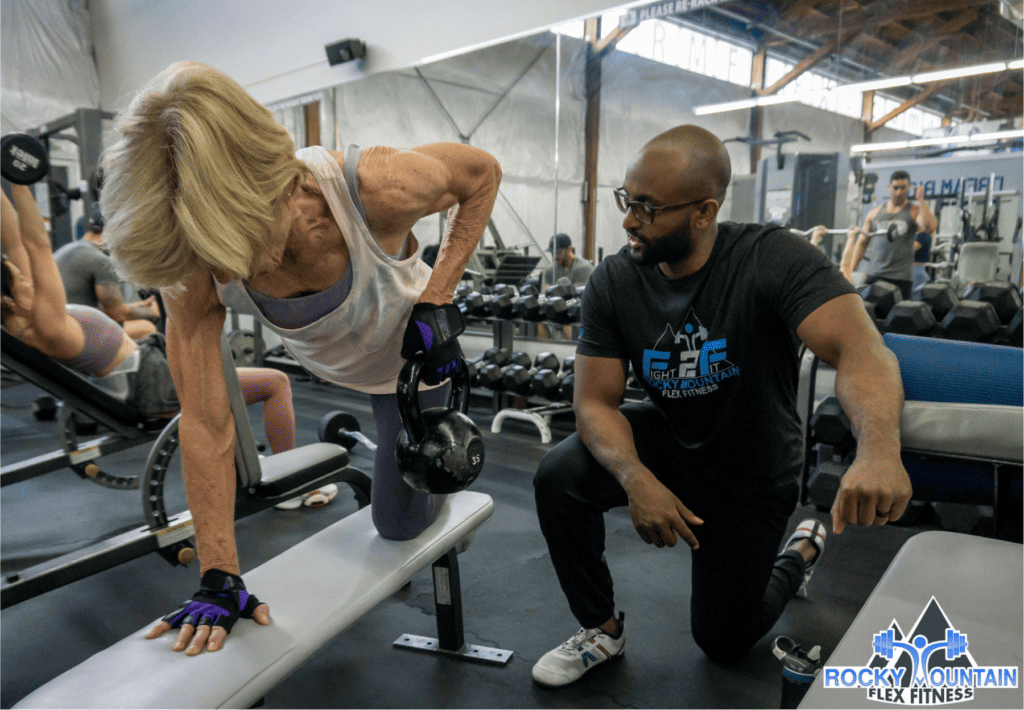
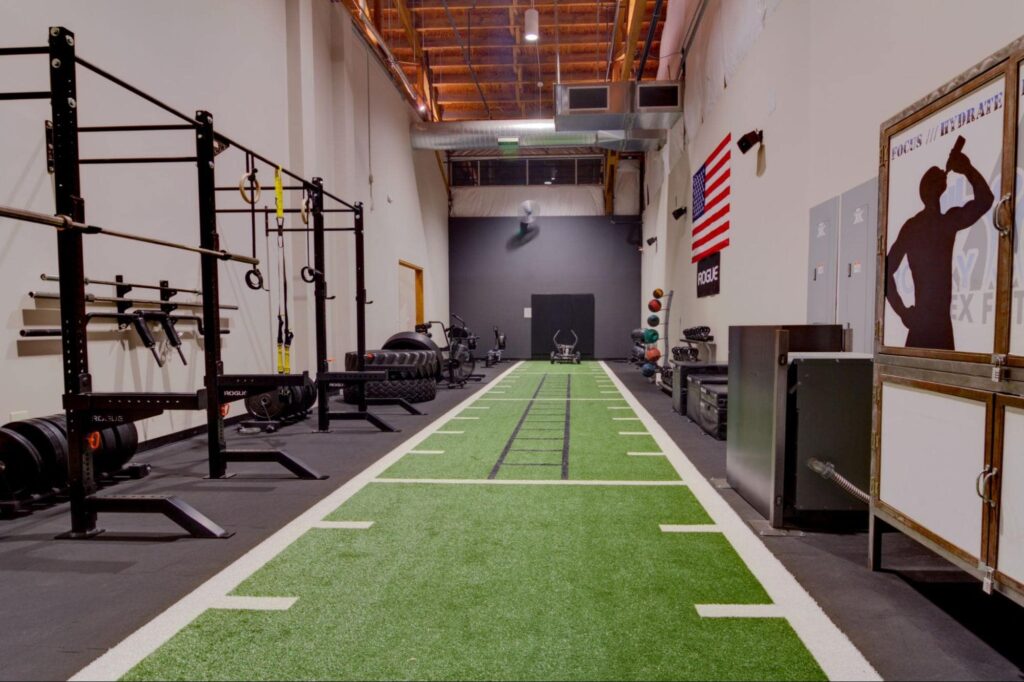
Britt’s 60-minute session is built to improve your strength and stamina through intervals, sled work, and full-body circuits using the turf, racks, kettlebells, SkiErgs, rowers, and treads. Below is a quick breakdown of what you can expect in class and why it deserves a spot in your weekly routine.
Check out our full class schedule here – we also offer Yoga, Handstand + Mobility, and Pilates HIIT classes each week!

Inside the Hybrid Training Class with Coach Britt
Hybrid turf training blends the best of both worlds, heavy lifting with cardio conditioning. It doesn’t have to be intimidating. Britt will adjust the weights and pacing for every person in the class, so you can focus on making steady progress each week. Every session uses a mix of our squat racks, sleds, kettlebells, treadmills, SkiErgs, and rowers.
Inside the Hybrid Training Class with Coach Britt
If you are planning to tackle HYROX in Denver, the actual race layout is eight 1km runs with eight different functional workout stations mixed in. The real challenge isn’t just the movements themselves. It’s learning how to run immediately after a heavy strength exercise when your legs are already burning.
In Britt’s class, you will pair heavy lifts like barbell squats, deadlifts, overhead presses, or sled pushes or drags directly with a cardio interval. You will learn how to treat a 200-meter jog as a recovery phase, focusing on bringing your heart rate back down under control so you can attack the next lifting station. Whether you want to compete in November or just want to build serious stamina, this is how you build real work capacity.

How The Hybrid Class Is Structured
Every RMFLEX Hybrid class follows a 4-superset format, allowing you to fully immerse yourself in each movement pattern before progressing to the next. This structure helps each person focus on form, effort, and consistency rather than rushing through endless exercises.
Each week alternates between two training focuses:
CARDIO-FOCUSED DAYS
These days emphasize heart rate, conditioning, and stamina.
- Work: 50 seconds
- Rest: 20 seconds
- Rounds: 4 rounds per superset
STRENGTH-FOCUSED DAYS
These sessions prioritize muscular strength, control, and time under tension.
- Work: 60 seconds
- Rest: 25 seconds
- Rounds: 4 rounds per superset
This balance ensures you’re not just training hard, you’re training smart.

The Performance Advantages of Hybrid Training
1. Adaptation to Strength Production Under Metabolic Stress
One of the most critical challenges in functional fitness competition is executing heavy strength movements immediately following sustained cardiovascular output. Performing a loaded lift while under metabolic fatigue requires the central nervous system to recruit muscle fibers while managing oxygen debt. Hybrid training replicates this exact physiological demand, forcing the nervous system and musculature to adapt to these transitions well ahead of race day.
2. Simultaneous Development of Concurrent Energy Systems
Athletes who over-specialize in either pure strength or pure endurance frequently find that their secondary modality dictates their competitive ceiling. A structured hybrid approach develops the aerobic base and anaerobic power pathways in parallel. This concurrent development enhances an athlete’s total work capacity, allowing them to sustain a higher power output, recover rapidly between operational stations, and mitigate performance decay late into a race.
3. Accelerated Exposure of Functional Weaknesses
Hybrid training environments deliberately create structural stress to expose hidden mechanical imbalances. Shortcomings such as grip failure under cardiovascular fatigue, technical breakdown during loaded movements, or respiratory inefficiency under load are quickly revealed. Identifying these performance gaps within a controlled training cycle allows for targeted, objective correction prior to competition.
4. Mitigation of Adaptation Plateaus and Overuse Injury
For athletes maintaining a high-volume training schedule across a full competitive season, strategic variation in stimulus is a physiological necessity. Monotonous training loads lead to neurological accommodation and increased risk of overuse patterns. The structural variety inherent in hybrid programming provides a novel training stimulus that sustains long-term physical progression while supporting systemic recovery.

The Performance Advantages of Hybrid Training
While exercises rotate weekly to keep training fresh and progressive, here are some staple movements commonly featured in our Hybrid classes:
1. Heavy Lifts and Carries
- Movements: Barbell squats, deadlifts, overhead presses, and sandbag carries.
- Focus: Spinal alignment, bracing under load, and maintaining posture when executing heavy, demanding lifts.
2. Turf and Sled Work
- Movements: Sled pushes, sled drags, and weighted walking lunges.
- Focus: Lower-body power development and knee stability when managing heavy sled pushes and drags across the turf.
3. Kettlebell and Skill Work
- Movements: Kettlebell swings, goblet squats, dumbbell presses, push-ups, and rows.
- Focus: Shoulder health, hip hinge mechanics, and building upper-body and core endurance under tension.
4. Cardio Intervals and Heart-Rate Control
- Movements: SkiErgs, rowers, treadmills, and 200-meter recovery jogs.
- Focus: Pacing strategy, respiratory control, and using the 200-meter jog to actively lower your heart rate between high-effort stations.
Want to see if Hybrid training is a good fit for you?
Join us for Britt’s Monday morning class. Classes are included with your membership. If you’re not a member yet, you can sign up for a free 7-day membership to test out the turf and experience the class for yourself.
We hope to see you in class!