At Rocky Mountain Flex, our personal trainers don’t believe in short bursts of motivation. They believe in building habits that create real, sustainable results. That means focusing on what actually moves the needle: smart programming, intentional recovery, disciplined nutrition, and consistency over perfection.
We asked our trainers to share the principles they’re coaching clients on right now. From habit-based goal setting and full body splits to nervous system recovery and long term mastery, this is the real world advice they use every day to help members train smarter, recover better, and stay consistent well beyond spring.
1. Marccus | Habits to Outcomes
One of the biggest mistakes I see people make when setting fitness goals is focusing only on outcomes instead of daily habits/behaviors. Instead of saying, “I want to lose 20 pounds,” shift the focus and get specific: “I will train three times a week and hit my protein target of 130g daily.” This way, sustainable progress comes from intentional, disciplined actions, not motivation. I also encourage clients to fuel their bodies intentionally, nutrition is the most important thing I can stress. So, prioritize protein at every meal and eat in alignment with your daily activity level. When your mindset shifts from chasing quick results to building disciplined habits and properly fueling for performance, progress on goals becomes SMART, Specific, Measurable, Attainable, Relevant, Timebound, along with predictable and sustainable.
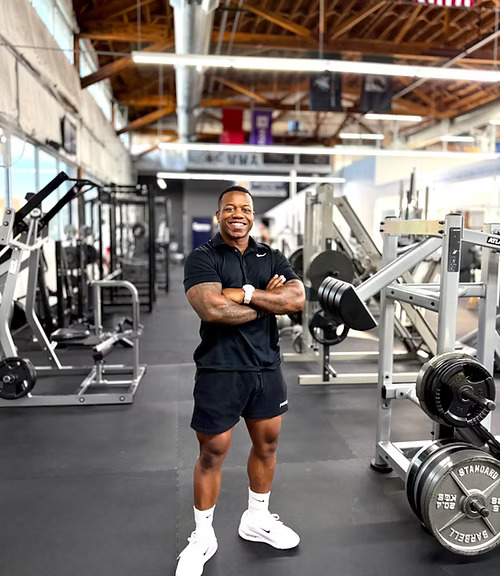
Marccus Spearman
2. Cole | Maximizing Your ROI: The Full Body Split
We have seen over the last few years, people talking about full body over the bro split. And I feel for the majority of people, the full body split gives you the most ROI for your time. You get more frequency for the muscle groups worked, you can have more variation within the workouts, and with this method you can (in theory) only need to workout 2 times a week and still have some progress.

Cole Fritz
3. Tom and Dawn | A lesson in Mastery vs Force
Every January, I see it — people come out swinging. Extra workouts. Slashed calories. “No days off.” That FORCE can absolutely get the fitness ball rolling. In fact, it should feel activating at first. You’re tapping into your sympathetic nervous system — the fight-or-flight side — increasing adrenaline, cortisol, and output.
That’s useful… temporarily.
But here’s what most regular gym-goers don’t realize: if you try to live in that state, the same FORCE that created momentum becomes FRICTION. Friction becomes – resistance. Resistance becomes – dread. And before you know it, the ball quietly rolls back to where it started.
MASTERY is different. Mastery understands rhythm. The parasympathetic nervous system — your recover, rebuild, adapt system — is where real progress sticks. Strength is built when you recover. Fat loss stabilizes when stress is managed. Motivation lasts when your nervous system feels safe, not threatened. After a “mostly productive’ 5 decades in the gym, I’ve learned (sometimes the hard way) that force is a tool, not a lifestyle. Use it to initiate. Use it when you need a push. But don’t confuse it or intensity with sustainability.
A few ways to move toward mastery:
- Train hard, but leave 1–2 reps in reserve more often than not.
- Schedule recovery with the same respect as workouts.
- Eat to fuel performance, not punish yourself.
- Track consistency, not exhaustion.
- Ask: “Can I repeat this next month?” If not, you’re forcing.
Force gets you started. Mastery keeps you going.
And the people who stay in the game long enough to see a real transformation? They learn when to push — and when to breathe.

Tom & Dawn Terwilliger
Performance & Longevity Strategists
Creators of the Force → Mastery™ Method
4. Brandon | The Power of the Well-Structured Program
The biggest piece of advice I have for people, regardless of where they are in their fitness journey, is to follow a well-structured training program. A good training program takes into account the person’s training goals, current abilities, and available training time. It also balances intensity, overload, volume, and fatigue management so that training is sustainable. Another thing that a well-developed training program does is provide efficiency – it ensures that the person gets the most out of each session, and maximizes progress while minimizing exercises or workouts that don’t actually move the needle towards their goals. Last, and most importantly, is that the program should be structured in a manner that allows for consistency over the long term – because ultimately, consistency drives results above all else.

Brandon Cavalier-Brancio
5. Steve | Move With Intention: Protecting the Human Body
Training and Movement
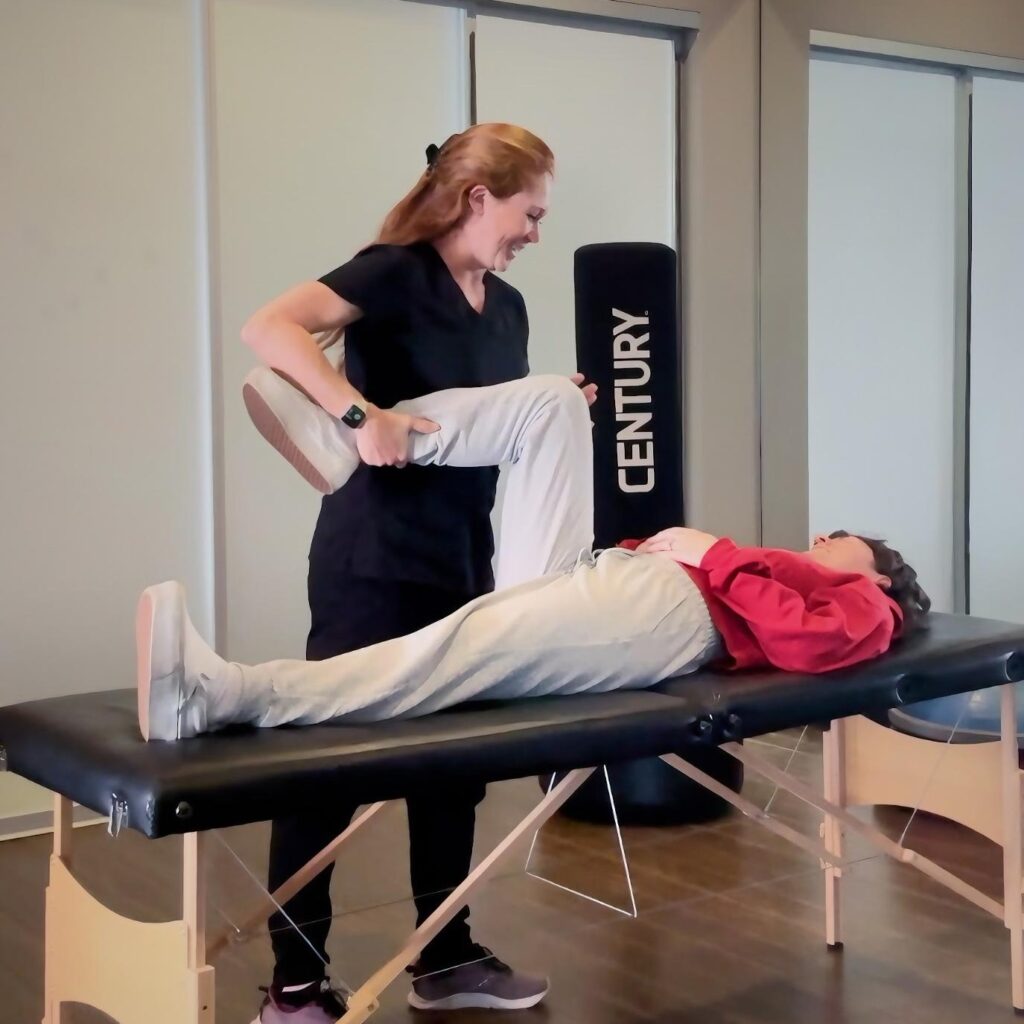
Having come from the Physical Therapy Clinic, I have personally seen the worst of what happens when things go wrong with the human body. From powerlifters whose SI joints have come out of place, to international airline pilots with bad shoulders, knee replacements, botched shoulder replacements, and recovery from stroke… you name it. Training and movement go hand in hand: if you move in a certain pattern, you are literally training that movement. This is what gets us into trouble sometimes. Just because we can lift the weight doesn’t always mean that we are moving correctly, or even that we should be lifting it at all. What I recommend to clients is phasing workouts all the way back to just bodyweight and bands, mainly for two reasons.
- To correct any discrepancies that we’ve developed over the months from strength training and prevent any injuries that we may be on the cusp of.
- To allow the Central Nervous System (CNS) to calm down. We might feel okay, but continuous stress sends a signal to the body to stay “on,” which can cause overactive muscles and poor movement patterns.
So allow yourself at least a week to recover, give your body a break, and move with intention.
Recovery and Lifestyle
This is something I’m currently having to learn myself, and I think it’s really important. What I’m about to mention is worth seriously considering. To recover, do something that brings you joy, and it can’t be working out. The reason is that “playing” is essentially what allows us to truly recover. However, we’re rarely told to just play, especially as adults. For me, that looks like soccer, and I’ve recently picked up archery. Playing, or doing something that makes you happy, tells our CNS that we’re safe and that it’s okay to let go. Skip the gym. Skip the workout and go find something you’ve been wanting to do for a while but haven’t had the opportunity to. Sound odd? Trust me, it is. If your answer is “but I work out for fun!” I get it. But that might also be telling us something: we may have become addicted to the adrenaline, cortisol, and stress markers, and haven’t given ourselves space to explore anything else. We will always revert to what we’re comfortable with, not necessarily what makes us happy.
Practical Habits
Break up tissue, and I don’t just mean foam roll. Think of foam rolling as a shotgun approach. When we break up tissue in the areas that cause the most issues, we move more efficiently, get muscle fibers firing correctly, and prevent so many injuries. Learning how to properly “roll out” does take a little more time, but if you’re feeling tight or dealing with nagging pains, rolling out and breaking up the fascia and adhesions we’ve built up will seriously change the way you look at your body, how you feel, and how you move.

Steve Johng
6. Luke | The Recovery Practice I Swear By
I feel like a lot of people right now are obsessed with “biohacking” and high-performance living, but they are also more burned out than ever. I see that a lot of people don’t just want another workout; they want to know how to sustain their energy so they can keep showing up.
I think the biggest mistake I see isn’t a lack of effort; it’s the “redline” effect. A lot of us are trying to drive a car at 100mph every day without ever changing the oil.
My personal belief is that if I had to recommend one recovery practice that bridges the gap between intensity and results, it’s High-Quality Nervous System Downregulation. Most people leave the gym in a “sympathetic” (fight-or-flight) state and head straight into a stressful workday, meaning their body never actually begins the repair process.
I do tell my clients to spend just five minutes breathing. By intentionally signaling to your brain that the “threat” is over, you kickstart the parasympathetic nervous system, which optimizes protein synthesis and lowers cortisol. Also, focusing on your breath while you are lifting makes the movement more effective and efficient and keeps you in the present moment, not thinking about what happened or what hasn’t happened yet.
Remember: You don’t grow muscle or lose fat while you’re lifting; you do it while you’re recovering. If you aren’t managing your stress, you may be leaving 50% of your results on the table.

Luke Rowe
7. Noah | Consistency vs. Perfection
One of the most obvious mistakes I see people make is confusing consistency with perfection. A lot of New Year Resolutioners hit February and feel like they’ve already “failed” because they missed a few workouts or had an off week with nutrition. One bad week doesn’t erase six good ones. The goal isn’t to never slip; it’s to make your comeback faster each time. If you can shorten the gap between falling off and getting back on track, you’re already winning.

Noah Moon
If there’s a common thread in all of this advice, it’s this: results don’t happen by accident. They’re built through consistent action, guided by experienced personal trainers who know when to push, when to pull back, and how to structure a plan that actually fits your life.
At Rocky Mountain Flex, our personal trainers are invested in more than your workouts. They care about how you recover, how you fuel, how you manage stress, and how you build strength that actually lasts. A big thank you to our training team for sharing their insight and expertise with our community.
If you’re ready to train with more structure, more intention, and better long term results, connect with one of our personal trainers. Use the contact info above or speak with a coach on the floor to schedule your consultation and start building a plan designed specifically for you.