Protein is everywhere right now… or at least the proteinification of everything.
Walk through the grocery store, and you will find protein cereal, protein chips, protein coffee, protein water, and plenty of foods that never used to advertise their protein content.
And honestly, we are glad people are paying attention to protein. It is important for building and maintaining muscle, especially when body recomposition is the goal. Protein water can be a great low-fat option when you need something quick, and convenient protein foods can help you hit your target.
Whole-food sources like chicken, fish, eggs, Greek yogurt, cottage cheese, and lean beef should still make up a good portion of your intake. They tend to be more filling and give you more nutrients than chasing a protein number on a label.
Protein also has the highest thermic effect of the three macros. Your body uses roughly 20 to 30% of the calories from protein during digestion and metabolism, compared with about 5 to 10% for carbohydrates and 0 to 3% for fat.
But with so much attention going toward protein, it is easy to overlook another macro that can make a big difference in your total calories: fat.
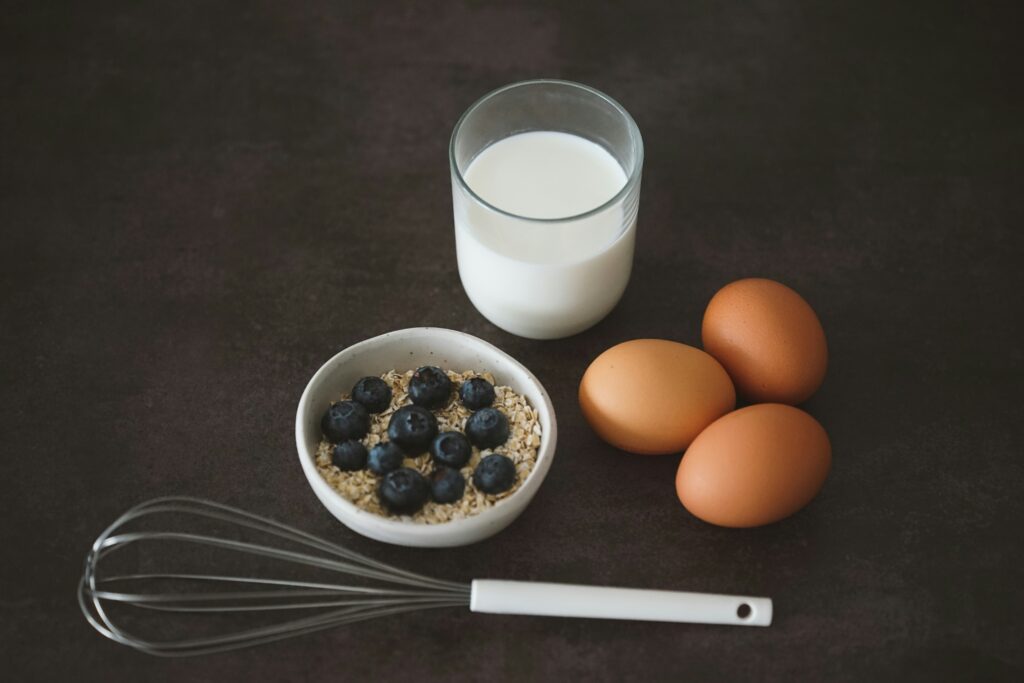
Eggs have protein, but they also contain fat. Salmon is an excellent protein source, but it is higher in fat than chicken breast. Nuts contain some protein, but most of their calories come from fat. Cheese, bacon, certain cuts of meat, salad dressings, butter, cooking oils, creamers, and some packaged high-protein foods can all add more fat than you may realize.
Fat provides about 9 calories per gram, compared with about 4 calories per gram for protein and carbohydrates.
So while everyone is asking, “Am I getting enough protein?” there is another question to ask:
How much fat am I actually eating?
We are not trying to demonize fat or tell you to cut it as low as possible. This post is for people who want to dial things in a little more and understand where their calories are coming from.
Fat grams can add up quickly
Take almonds as an example. About 1oz, or a small handful, provides roughly 164 calories, 14g of fat, and 6g of protein.
Picture yourself sitting through a long meeting with a bag of almonds next to you. You grab one handful, then another, then one more without really thinking about it. Three 1oz portions would put you around 490 calories and 42g of fat.
Three handfuls later, your “healthy little snack” has basically turned into a meal.
Cooking fats are another easy one to miss. One tablespoon of olive oil contains roughly 119 calories and 14g of fat, while a tablespoon of butter is around 100 calories and 12g of fat. If you pour oil around the pan a few times or toss in a couple chunks of butter, you may be using more than you think.

If you have ever said, “That was probably a tablespoon,” there is a decent chance it was not.
Coffee can add up too. A tablespoon of half-and-half is only around 20 calories and 2g of fat, while heavy cream is roughly 50 calories and 5 to 6g of fat per tablespoon.
Tracking with an app such as Cronometer or MyFitnessPal for a week or two can give you a much better picture of what your portions actually look like.
What does that look like in real food?
These numbers are approximate because brands, portion sizes, cuts of meat, and preparation methods can change the nutrition information.
- Almonds, 1oz: about 164 calories, 14g fat, 6g protein
- Peanut butter, 2 tablespoons: about 190 calories, 16g fat, 7g protein
- Avocado, 1/2 medium: about 115 calories, 10.5g fat, 1g protein
- Whole egg, 1 large: about 72 calories, 5g fat, 6g protein
- Egg whites, 3 large: about 51 calories, less than 1g fat, 11g protein
- Sharp cheddar cheese, 1oz: 110 calories, 9g fat, 7g protein
- Stonyfield plain whole-milk yogurt, 3/4 cup: 120 calories, 7g fat, 6g protein
- FAGE Total 5% whole-milk Greek yogurt, 5.3oz: 140 calories, 8g fat, 14g protein
- Good Culture 6% cottage cheese, 1/2 cup: 120 calories, 7g fat, 14g protein
- Culina Plain & Simple coconut yogurt, 5oz: 200 calories, 20g fat, 2g protein
- Butter, 1 tablespoon: about 102 calories, 11.5g fat
- Olive oil, 1 tablespoon: about 119 calories, 13.5g fat
- Half-and-half, 1 tablespoon: about 20 calories, 1.7g fat
- Heavy cream, 1 tablespoon: about 50 calories, 5.4g fat
- Center-cut bacon, 2 skillet-cooked slices: about 60 calories, 4.5g fat, 5g protein
- Thick-cut bacon, 1 pan-fried slice: about 80 calories, 7g fat, 5g protein
- Chicken thigh, skinless and cooked, about 4oz: about 200 calories, 9g fat, 28g protein
- Wild Atlantic salmon, cooked, 3oz: about 155 calories, 7g fat, 22g protein
- Farmed Atlantic salmon, cooked, 3oz: about 175 calories, 10.5g fat, 19g protein
- Ribeye steak, cooked, about 4oz: roughly 330 calories, 25g fat, 27g protein
- 80/20 ground beef, 4oz raw: about 290 calories, 23g fat, 19g protein
- 85/15 ground beef, 4oz raw: about 240 calories, 17g fat, 21g protein
- 90/10 ground beef, 4oz raw: about 200 calories, 11g fat, 23g protein
- 93/7 ground beef, 4oz raw: about 170 calories, 8g fat, 24g protein
- 96/4 ground beef, 4oz raw: about 150 calories, 4.5g fat, 25g protein
Think about breakfast: three whole eggs already give you around 15g of fat. Add butter to the pan, cheese, bacon, half an avocado, and cream in your coffee, and the fat can climb quickly before lunch.

You do not have to give up the foods you enjoy. You could use one or two whole eggs with egg whites, keep the avocado, and cook with an oil spray. You still get a filling breakfast with plenty of protein, but you have more room in your macros for the rest of the day.
Ground beef shows how much the fat percentage can change the numbers. A 4oz serving of 80/20 has roughly 15g more fat and 120 more calories than the same amount of 93/7. Same burger idea, very different macro outcome.
Ribeye is similar. A 4oz portion is already fairly high in fat, and many people are eating more than 4oz of steak at a meal. As the portion gets bigger, the protein goes up, but so do the fat and calories.
Lower-fat swaps can give you more room
You do not have to choose the lowest-fat version of everything. A few small swaps can give you a lot more flexibility.
You could choose 93/7 or 96/4 ground beef instead of 80/20, choose lean ground turkey, combine whole eggs with egg whites, choose chicken breast instead of chicken thighs for one meal, or use canned light tuna in water when you want a lean protein source.
Measure peanut butter instead of eyeballing it. Choose center-cut bacon over a thick-cut variety. Use an oil sprayer instead of free-pouring oil into the pan.
You are not trying to make every meal low-fat. You are creating room for the foods you want the most while working toward your goals.
Don’t take fat or calories too low
There is a big difference between being more intentional with fat and trying to cut it out of your diet.
Fat provides essential fatty acids, helps you absorb vitamins A, D, E, and K, and is an important part of your cell membranes, brain, nervous system, and normal hormone function. Your body also uses cholesterol as the starting material for steroid hormones such as estrogen, progesterone, testosterone, and cortisol. Certain fatty acids are also involved in immune function and the regulation of inflammation.
For people who train hard, the bigger concern is often what happens when overall food intake gets too low for too long. If you are consistently eating less energy than your body needs to support both training and normal body functions, hormone production can be affected.
In women, low energy availability can contribute to irregular periods or periods stopping altogether, along with lower estrogen and progesterone and changes in bone health. Men can also experience hormone changes, including lower testosterone and libido.
Losing your period is not a normal sign that your diet is “working.” If your cycle becomes irregular or stops while dieting or training heavily, talk with your healthcare provider.
The goal with body recomposition is to lower body fat without under-fueling the body you are asking to train, recover, and perform.
Choose where your fat comes from
Most of us are not struggling to find fat in our diets. Saturated fat is easy to get from foods like fatty cuts of red meat, meats you find on a charcuterie board, butter, cheese, cream, desserts, fried foods, and restaurant meals, and many Americans already consume more saturated fat than recommended.
Omega-6 fats are also common in the American food supply because linoleic acid, the main dietary omega-6, is found in oils such as soybean, corn, and sunflower oil and many foods made with them.
That does not mean omega-6 is bad or that you need to eliminate seed oils. Omega-6 is an essential fat, and research does not support treating it as inherently inflammatory. The bigger nutritional gap for many people is getting enough of the marine omega-3s EPA and DHA.
Avocado, nuts, seeds, olive oil, salmon, sardines, and other fatty fish all contain fat, but they also bring different nutrients to the table.

EPA and DHA are found primarily in seafood, with salmon, sardines, herring, mackerel, and trout among the better sources. DHA is highly concentrated in the brain and retina, and omega-3s also play an important role in cardiovascular health.
The American Heart Association recommends eating fish, particularly fatty fish, twice per week.
So if salmon is dinner, do not avoid it just because it has more fat than chicken breast. Keep another meal leaner and make room for the salmon.
Plant foods such as chia seeds, flaxseed, and walnuts provide ALA, another omega-3 fatty acid. Your body can convert ALA into EPA and DHA, but that conversion is limited.
What about an omega-3 supplement?
Getting EPA and DHA consistently from food can be difficult if you are not eating fatty fish a couple of times per week and if your body is actually absorbing these fats.
For people who are not getting much EPA and DHA through food, an omega-3 supplement can be a good way to fill that gap.

When comparing supplements, look at the actual amount of EPA and DHA on the Supplement Facts panel, not just the total amount of fish oil. A bottle that says 1,000mg of fish oil does not necessarily contain 1,000mg of EPA and DHA.
Look for a reputable product and talk with your healthcare provider about the amount and type that are appropriate for you, especially if you take medications or are considering a higher dose.
The weekend still counts, but it can also be part of the plan
You do not have to eat exactly the same way seven days a week. Depending on your goals and how your nutrition plan is structured, the weekend may include a planned refeed, a higher-carb day, or a fun meal because having some flexibility makes the plan easier to stick with.
Refeeds are also used in physique and resistance-training settings. They are generally planned periods of higher calorie intake, often by increasing carbohydrates, rather than an anything-goes weekend.

Maybe Friday night is pizza, or Saturday is dinner out. That can fit into your plan. The issue is when one planned meal turns into the entire weekend being far outside your usual intake. If body composition progress has stalled, look at the full week instead of only Monday through Friday.
Your macros, unfortunately, do not clock out at 5 p.m. on Friday.

A macro calculator gives you an estimate, not a number set in stone. Track your progress, pay attention to your training and recovery, and adjust from there.
If you are not sure how to put those numbers into practice, consider working with an RMFLEX trainer who has experience with macros and body composition goals.
Check out our trainer wall located under the TV in the cardio room or ask us at the front desk if you would like help connecting with a trainer who can help with your training and nutrition goals.
Before you cut more calories, look at where they are coming from
If you have been training consistently and your body composition has stopped changing, spend a week looking closely at what you are eating. Sometimes the problem is not your chicken and rice. It is everything that happened around the chicken and rice.
You may not need to cut your calories lower or add more cardio. You may just need a clearer picture of how your protein, carbohydrates, fat, portions, and total calories are adding up.
What you do at Rocky Mountain Flex is only part of the equation. Your nutrition should support your strength, recovery, performance, and body composition goals.
Train hard, eat with a plan, and fuel your body for the results you are working toward.